Hospital-Level Wound Care at Home: A Guide for Patients and Families
The Reality of Healing at Home
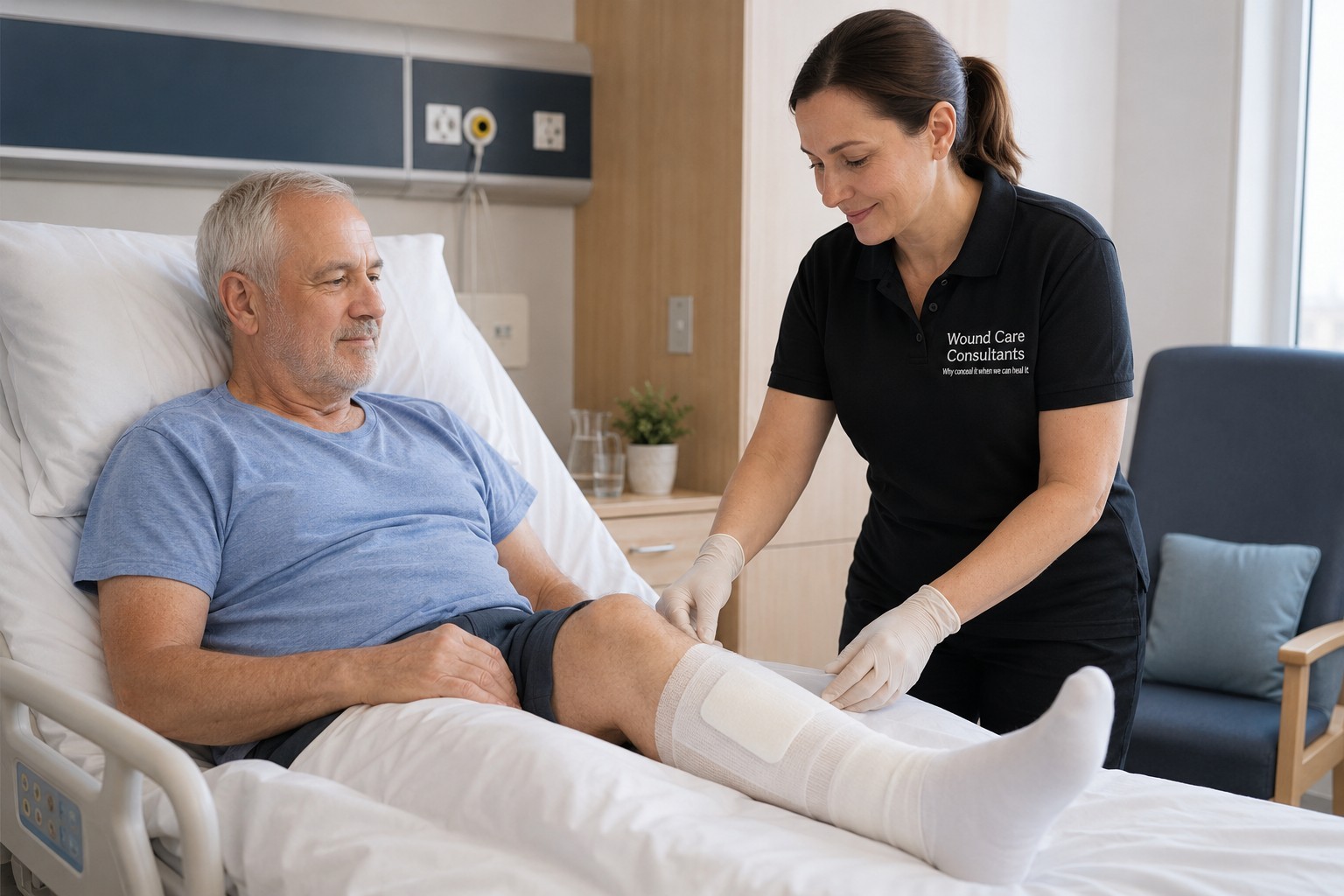
Caring for a loved one with a complex wound can be overwhelming. The constant trips to and from the hospital, the exhaustion from travel, the wait times, and the worry in between appointments can take a huge toll on both the patient and their caregiver.
All of these factors often lead to one wish: to be able to heal in the comfort of your own home. Being surrounded by familiar sights, sounds, and loved ones can drastically improve wellbeing, however, with this relief often comes a very valid anxiety. Without the immediate clinical oversight of a ward, how can you be sure that your loved one is receiving hospital-grade care and infection control?
This is where expert-led at-home complex wound care can help. With access to private wound-care advice, the same high standards upheld within a hospital can be brought directly to your front door, giving you peace of mind without having to leave your home.
Replicating Hospital Standards in a Domestic Setting
A home may look very different from a hospital ward, but that doesn't mean it can't meet the same level of clinical excellence. With the support of a specialist, safety, cleanliness, and evidence-based care can be implemented to the same rigorous standards.
Here's how this is achieved:
Expert review of current practices: A wound care specialist will begin by reviewing your existing care routine. This includes looking at your current dressings, products, equipment, and techniques to determine what is already working, and where improvements are needed.
Thorough audit of documentation and treatment pathways: Just like within a hospital, your care will be tracked correctly. Specialists will audit any existing care notes, medication, dressing changes, and referral timelines, ensuring that everything is accurately documented in line with best-practice and governance frameworks.
Personalised, hospital-grade protocols: Based off of these findings, your specialist will create a tailored care plan that mirrors evidence-based hospital wound care protocols, however, adapted to fit your home environment and daily life.
Ongoing clinical oversight: Many specialists will liaise with your GP, district nurses, or hospital team to ensure full continuity of care throughout your loved one's recovery.
These measures allow for the gold standard of care, all whilst allowing your loved one to remain safe and comfortable in their own bed.
Collaborative Care With Family and Visiting Nurses
When it comes to wound care at home, it is rarely a one person job. More often than not, care is provided by a combination of devoted family caregivers and visiting healthcare professionals, such as district nurses. For this reason, collaboration is the key to success.
Our specialist approach focuses on uniting your entire care team together to achieve the best outcomes possible:
Working as one team: Your specialist will take the time to speak with both family caregivers and visiting nurses, listening to your concerns, routines, and any challenges that you face day to day.
Identifying areas for improvement together: By collaborating with your team, we're able to pinpoint realistic changes. This could be anything from repositioning timings, to product access or environmental risks within the home.
Streamlining protocols to fit your life: Instead of adding hours of care onto your day, protocols are simplified and adapted to work around your existing routine. These evidence-based approaches are designed to be sustainable for the long term.
Enhancing healing rates and comfort: By implementing these changes as a collective, homebound patient healing is optimised. This not only improves recovery times, but drastically increases comfort for your loved one.
This united approach ensures that no caregiver feels alone, and that every decision is made as a team for the benefit of the patient.
Tailored Education for the Home Caregiver
The most impactful part of at-home complex wound care isn't the dressing change itself, it's the knowledge that you are left with afterwards. By equipping caregivers with hospital-level skills, you're able to spot complications earlier, prevent avoidable harm, and care with confidence between specialist visits.
Core Skills We Teach:
Accurate wound assessment: Learn how to monitor the size, colour, exudate, and surrounding skin, as well as how to spot the early warning signs of deterioration.
Proper dressing selection: Gain an understanding of different dressing types, when to change them, how to change them safely (if advised), and how to store products correctly.
Proactive pressure-ulcer prevention: Practical tips specifically for bedbound or mobility-restricted patients, including repositioning schedules, pressure-relieving equipment, and daily skin checks.
Vital infection management: Learn the red flag symptoms of infection, such as increased pain, heat, swelling, odour, or signs of sepsis, as well as exactly when and how to seek urgent medical help.
How We Deliver This Education:
Hands-on training: We demonstrate every skill in your home, allowing you to practice under the supervision of a specialist until you feel confident.
Adapted to your environment: All advice is tailored towards your space, equipment, and the specific needs of your loved one, opposed to a generic checklist.
Ongoing support: Education doesn't end after one session. We'll be on hand for follow ups, questions, and refreshers whenever you need them.
Bringing Clinical Excellence Home, Together
Your loved one deserves hospital-grade care, but they also deserve to heal in a place where they feel safe, loved, and at ease. With expert private wound-care advice, collaborative support for your care team, and tailored education, at-home complex wound care allows for both of these things to go hand in hand.
Ready to take the first step? Contact our specialist team at [Insert Email Address] or [Insert Phone Number] today to book your initial consultation. We'll conduct an expert review of your current care routine and create a personalised plan to help your loved one heal faster, safer, and in the comfort of their own home.
Important Safety Disclaimer
The information provided within this article is for informational purposes only, and is not a substitute for professional medical advice, diagnosis, or treatment. If you are experiencing a medical emergency, including, but not limited to, heavy bleeding, signs of sepsis (such as a high fever, chills, confusion or rapid breathing), or rapidly worsening wound symptoms, call the emergency services in your region immediately.
Always follow the advice and care plan that has been given to you by your qualified healthcare professional.
Get in Touch
We will ask you a series of questions that will guide your follow-up with an appointment coordinator.